Tag: jesus

  • Innocence Is Not Ignorance — Truth Is Ageless

    Many people confuse innocence with weakness or ignorance, but they are not the same.

    Ignorance is the absence of knowledge.

    Innocence is the absence of corruption.

    A person can be highly educated and still be morally lost. Another may be simple, childlike, and innocent yet possess deep wisdom about life, love, truth, and God.

    Innocence is not stupidity.

    It is purity before contamination.

    Children reveal this mystery clearly. A child may not understand politics, business, or the complexities of the world, yet children often recognize sincerity faster than adults do. They sense love naturally. They trust easily. They cry honestly. They forgive quickly. Their hearts are still close to truth because they have not yet fully learned manipulation, deception, pride, or greed.

    As people grow older, many lose innocence not because they gained wisdom, but because the world wounded them.

    Pain teaches suspicion.

    Betrayal teaches fear.

    Competition teaches selfishness.

    Pride teaches pretending.

    Slowly, many adults become skilled in surviving but poor in spirit.

    That is why some elderly people become bitter while others become gentle and radiant. Aging alone does not produce wisdom. The condition of the heart determines what kind of person emerges over time.

    True innocence is actually powerful because it sees clearly.

    An innocent person can often recognize evil faster than corrupted people because darkness no longer shocks or bothers those already used to it. But a pure heart immediately senses when something is wrong.

    This is why conscience is strongest when we are young. Before the soul becomes numb, truth feels sharp and alive inside us.

    And truth itself does not age.

    Fashion changes.

    Technology changes.

    Empires rise and collapse.

    Human opinions constantly shift.

    But truth remains.

    Love is still better than hatred.

    Forgiveness is still better than revenge.

    Humility is still better than arrogance.

    Peace is still better than violence.

    Goodness is still beautiful even in a dark world.

    Thousands of years pass, yet these truths remain untouched by time.

    That is why truth feels eternal.

    Human beings may try to redefine morality depending on culture, trends, or convenience, but deep inside, the soul still recognizes what is real. Even people who lie still want honesty from others. Even cruel people want loyalty from those they love. Even corrupt societies still admire courage, sacrifice, and compassion.

    Truth survives generations because it does not come merely from human opinion. Truth reflects something eternal.

    And perhaps this is why Jesus said we must become like little children.

    Not childish.

    Not ignorant.

    But pure in heart.

    Children still believe.

    Still wonder.

    Still trust.

    Still feel awe.

    Still love without calculation.

    The world often calls innocence weakness because innocence cannot easily survive in corrupt systems. But innocence is not weakness—it is uncorrupted light.

    A truly innocent person may cry easily, forgive easily, and love deeply, but those qualities require enormous spiritual strength in a world that rewards hardness and selfishness.

    Truth is ageless because it belongs to eternity.

    And innocence is precious because it keeps the soul capable of recognizing that truth.

  • I Found It!

    In the late 1970s, I remember seeing a strange sign almost everywhere in the city.

    “I FOUND IT!”

    The words were bold and impossible to ignore. They appeared on walls, posters, stickers, and public places as though someone was trying desperately to announce a great discovery to the world.

    And as a child, I used to wonder:

    Found what?

    What could be so important that people wanted everyone to know about it?

    At that age, I did not understand.

    But life has a mysterious way of answering questions many years later.

    Now I know what they meant.

    Because after years of emotional torment, confusion, fear, shame, disappointments, and inner battles, I finally found what my soul had been searching for all along.

    I found peace.

    Or more accurately—

    Peace found me.

    It happened when I was already preparing to leave this world.

    I had become exhausted from fighting my own thoughts. My mind never rested. Day and night, it kept replaying failures, regrets, humiliations, fears, and painful memories.

    My thoughts became like cruel voices that would not stop speaking.

    Why did you trust so easily?

    Why were you weak?

    Why did you destroy your own life?

    Why can’t you move on?

    Why are you like this?

    The human mind can become a frightening place when hopelessness settles inside it.

    And slowly, suicidal thoughts entered my life and stayed.

    At first they frightened me.

    Later, they comforted me.

    That is the dangerous thing about despair.

    Death begins disguising itself as relief.

    It whispers:

    “You can rest now.”

    “No more humiliation.”

    “No more fear.”

    “No more pain.”

    “No more memories.”

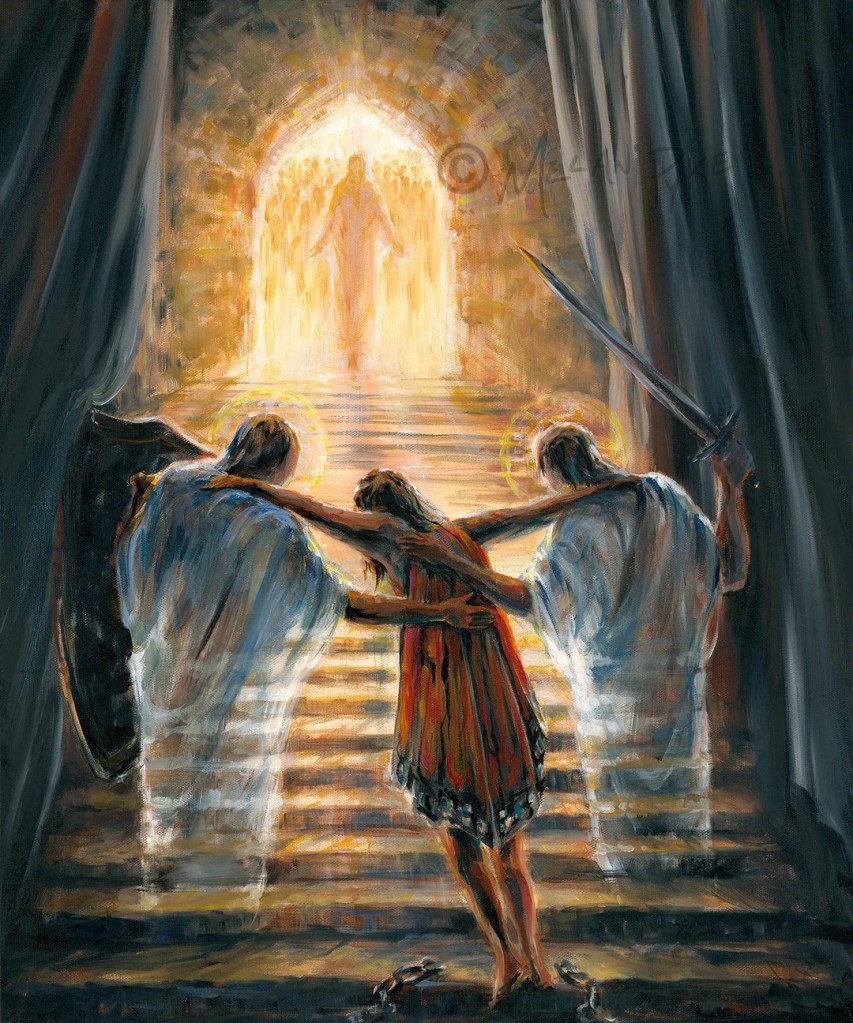
    Suicide started looking like a doorway out of suffering—an escape from the world, from pain, and worst of all, from myself.

    But somewhere deep inside me, I still knew something important:

    Hell is real.

    And I was afraid.

    I had already suffered enough from decisions I made impulsively and emotionally. Looking back now, I understand the wisdom behind the old saying in that popular song:

    “The wise never rush.”

    But pain makes people rush.

    Pain clouds judgment.

    Pain narrows vision.

    Pain convinces a wounded person that there are no more possibilities left.

    And at that point in my life, I felt spiritually blind.

    I had no answers that could quiet my mind. No philosophy could comfort me. No success, money, relationship, or distraction could remove the heaviness inside my soul.

    So in complete desperation, I prayed.

    Not a memorized prayer.

    Not a religious performance.

    Not elegant words.

    Just raw honesty.

    I poured out everything inside me before God.

    I spoke to Him from the deepest wounded parts of my heart. I confessed my anger, my fears, my disappointments, my shame, and my exhaustion.

    I told Him how unfortunate I felt.

    How I believed I had ruined my own life through poor decisions, weakness, and lack of wisdom. I cried over opportunities lost, dignity broken, dreams destroyed, and years wasted in emotional suffering.

    That day, I prayed like a drowning person gasping for air.

    And tears flowed endlessly.

    For a long time, I used to think tears were weakness. I thought crying was simply self-pity and emotional collapse.

    But later, Scripture showed me something beautiful:

    God sees tears differently.

    In Psalm 56:8 it says:

    “You keep track of all my sorrows. You have collected all my tears in your bottle.”

    Imagine that.

    A God so attentive that even tears are counted.

    Not ignored.

    Not mocked.

    Not wasted.

    Counted.

    Then I discovered another verse that touched me deeply, Psalm 126:5:

    “Those who sow in tears will reap with songs of joy.”

    That verse changed the way I saw suffering.

    Tears were not proof that God had abandoned me.

    Sometimes tears are part of transformation.

    Sometimes brokenness becomes the soil where healing quietly begins.

    And perhaps the verse that comforted me most during those dark days was Psalm 34:17–18:

    “The righteous cry out, and the Lord hears them;

    He delivers them from all their troubles.

    The Lord is close to the brokenhearted

    and saves those who are crushed in spirit.”

    Crushed in spirit.

    That was exactly what I had become.

    Not physically wounded.

    Not visibly dying.

    But internally crushed.

    And maybe that is why Jesus came to me in that moment.

    Because God responds to sincerity.

    Not perfection.

    Not performance.

    Not religious image.

    Just truth.

    I called on Him with the last strength I had left in me.

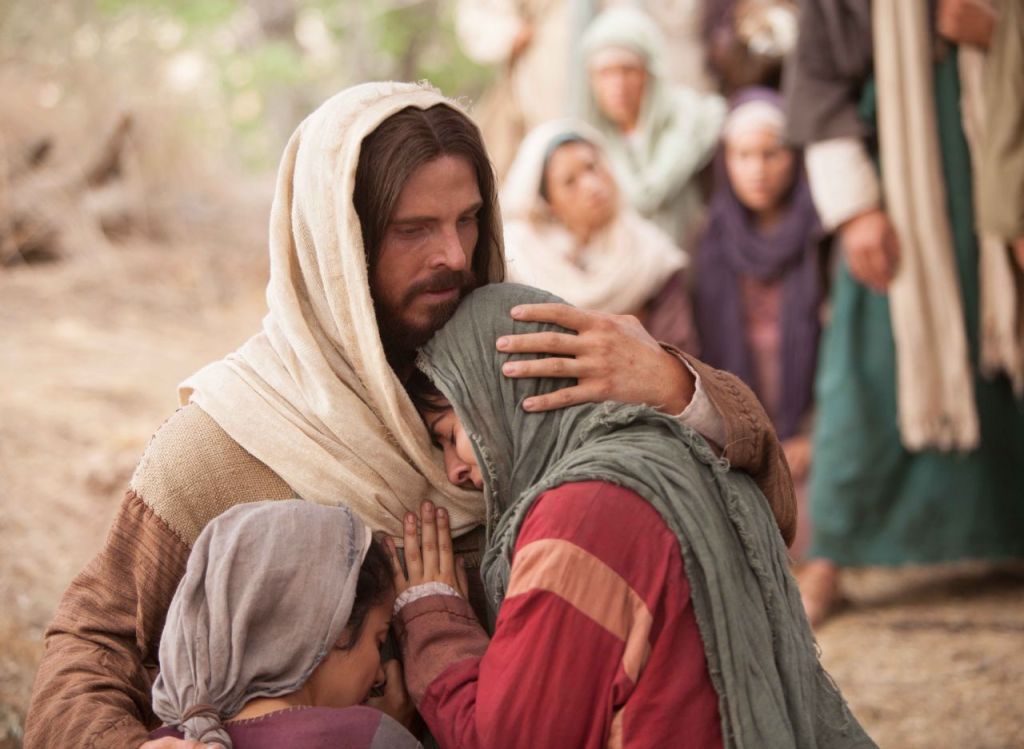
    And Jesus answered.

    Not with condemnation.

    Not with anger.

    Not with rejection.

    But with understanding.

    With gentleness.

    With words that pierced through the darkness surrounding my mind.

    “You’re tired… fed up… and now you’re ready to give up.”

    He repeated back to me the very pain I could no longer carry alone.

    And then came the words that changed my life forever:

    “My turn.”

    That was the moment I finally understood what those signs from my childhood truly meant.

    I FOUND IT.

    Not religion.

    Not perfection.

    Not escape.

    I found the One who could finally give rest to my weary soul.

  • You came from GOD

    Many people notice something mysterious as they grow older: the body ages, but something deep inside still feels the same.

    A woman may already have wrinkles, gray hair, and grandchildren, yet when she remembers her childhood, she does not remember it as an old person looking back. Inside, she still feels like “herself.” The same awareness. The same soul. The same inner being that once laughed, cried, dreamed, feared, and loved when she was young.

    This is why many believe that the spirit inside us does not age.

    The body belongs to time, but the spirit came from God.

    Everything physical is affected by time. Skin changes. Strength weakens. Memory sometimes fades. But the inner self—the spirit—remains strangely untouched by age. That inner life continues to feel alive, aware, emotional, longing, and eternal.

    The Bible itself hints at this mystery. Human beings are not merely flesh and blood. We were created with a spirit breathed into us by God. The body is temporary, but the spirit carries eternity within it because its source is eternal.

    That is why material things alone can never fully satisfy a human being.

    We can feed the body with food.

    We can entertain the mind with pleasures.

    We can decorate our lives with success, beauty, and possessions.

    Yet something inside still asks deeper questions:

    “Why am I here?”

    “What is love?”

    “What happens after death?”

    “Why does my soul long for peace?”

    Animals live mostly by instinct, but human beings search for meaning because the spirit inside us is reaching for its origin—God Himself.

    The spirit also explains why some pains never feel physical alone.

    A broken heart can hurt more than sickness.

    Rejection can wound a person deeply even if nothing touched their body.

    Loneliness can make someone feel empty despite wealth and comfort.

    This is because the spirit is the deepest part of who we are.

    And just as the spirit can be wounded, it can also be healed.

    Love heals it.

    Truth heals it.

    Forgiveness heals it.

    Faith heals it.

    Most of all, many people who encounter God describe the same thing: a kind of rest that no material comfort could ever give.

    Because the spirit recognizes its Creator.

    This is also why elderly people often say they still feel young inside. Their body may move slowly, but their inner self still feels alive and aware. The child within them never completely disappears because the spirit does not grow old the way flesh does.

    The body is like clothing we wear for a season on earth.

    But the spirit is the real person.

    And perhaps that is why death frightens humanity so much. Deep inside, we sense we were made for something beyond this temporary world. The spirit inside us keeps whispering that life must be more than survival, work, pain, aging, and eventually disappearing.

    We long for eternity because eternity was placed within us.

    That longing for lasting love, lasting peace, lasting joy, and lasting life points toward God—the eternal source from whom the spirit came.

    And maybe that is why even after all the heartbreaks, disappointments, betrayals, and suffering in life, something inside us still hopes.

    The spirit remembers where it came from.

  • The child within

    Why Does the Spirit Hunger for God?

    There was a season in my life when I had everything I once prayed for—a good income, a comfortable home, and freedom from many of the struggles that haunted my younger years. Yet on certain nights, an emptiness would visit me that no achievement could explain.

    I had accomplished goals that I once thought would make me completely happy. The things I dreamed about when I was younger had finally arrived. But there remained a quiet longing inside me, something that no amount of success, comfort, or possessions could satisfy.

    It was then that I began to understand that the spirit hungers differently from the body.

    The body asks for food.

    The mind asks for answers.

    But the spirit asks for God.

    Why?

    Because unlike the rest of creation, human beings carry something eternal within them. We are not merely flesh, emotions, and intellect. Deep inside us is a spiritual reality that comes from God and longs for Him.

    Animals live by instinct. Their needs are physical and immediate. But human beings possess something far greater. We have the ability to step outside ourselves and examine our own lives. We can reflect on our thoughts, question our motives, evaluate our actions, and wonder whether we are living according to a higher purpose.

    This is what we often call conscience.

    Conscience is that quiet voice within us that asks difficult questions:

    “Was I truthful?”

    “Was I kind?”

    “Did I act out of love or selfishness?”

    “Would this be pleasing to Father God?”

    Even when nobody else sees what we do, conscience sees.

    It watches.

    It remembers.

    It calls us back to what is true.

    I believe this is one of the greatest signs that we were created for more than this temporary world.

    The spirit is always searching for its Source.

    The spirit recognizes that success without purpose is empty. Wealth without peace is exhausting. Achievement without God eventually leaves the heart thirsty again.

    Perhaps this is why so many people spend their lives searching. Some seek fulfillment through money. Others through relationships, status, travel, entertainment, or possessions. Yet after every accomplishment, a familiar question often returns:

    “Is this all there is?”

    The spirit already knows the answer.

    It was made for eternity.

    It was made for God.

    This is also why I believe the “child inside us” is the real us.

    Not the wounded adult.

    Not the image we project.

    Not the masks we wear to protect ourselves.

    The child inside carries our earliest feelings before the world taught us how to hide, perform, defend, impress, manipulate, or pretend.

    Before we learned pride.

    Before we learned fear.

    Before we learned to seek approval from people.

    There was a simple authenticity in us.

    A natural trust.

    A natural wonder.

    A natural openness to love.

    Children ask questions because they genuinely want truth. They forgive more easily. They find joy in simple things. They believe what is good before they learn suspicion and cynicism.

    Jesus Himself pointed to this reality when He said that we must become like little children.

    He was not speaking about becoming childish.

    He was speaking about recovering humility, trust, openness, and dependence upon God.

    The older I become, the more I realize that spiritual growth is not about becoming someone new. It is often about returning to who God originally intended us to be.

    Peeling away the layers of fear.

    Removing the masks.

    Healing the wounds.

    Finding our way back to the child who still believes.

    The child who still hopes.

    The child who still trusts God.

    The child who knows, deep down, that nothing in this world can satisfy the deepest longing of the human spirit except the One who created it.

    And that is why the spirit continues to hunger for God.

    It is simply trying to find its way home.

  • I have a soul

    My faith and spirituality did not come from my family. I first encountered God through a catechist at school—a quiet, gentle teacher who spoke to us about the Bible in a way that felt simple, yet strangely personal.

    I still remember one afternoon in that classroom. The air was warm, and sunlight slipped through the windows, landing softly on our desks. Most of my classmates were restless, waiting for the bell to ring—but I found myself listening. Really listening. There was something in the way she spoke about God that made Him feel… close. Not distant or abstract, but real.

    I didn’t fully understand it then, but something in me responded.

    That small moment quietly changed the direction of my life.

    Decades later, that same seed came back in a way I never expected. In my forties, while recovering from breast cancer, I stepped away from my career and found myself with time to reflect. Out of deep gratitude to God for restoring my health, I chose to volunteer and teach children—pouring into their lives in the same way someone had once poured into mine.

    It made me realize how powerful it is when someone passes on truth that brings hope, renewal, and the promise of life beyond this one.

    I was only ten when I first tried to approach God on my own.

    I remember standing in front of a mirror, noticing the redness on my skin, feeling the familiar sting of embarrassment. My eczema had made me painfully aware of how I looked, especially around classmates and neighbors. That night, I lay in bed, staring into the dark, and whispered a prayer I had never said out loud before.

    I made a deal with God.

    If You heal me… if You take this away… I will give my life to You. I will enter the convent.

    It was a child’s prayer—simple, honest, and a little desperate.

    Looking back, I see how natural it was for me to reach for God, even at that age. It makes me wonder how different things might be if more children were simply allowed to know Him early on.

    Parents often worry that introducing faith too soon might confuse their children. But I’ve come to believe that something in them already understands more than we think.

    Our bodies are new, yes—but there is a deeper mystery to who we are. As it says in Jeremiah 1:5:

    “Before I formed you in the womb I knew you,

    before you were born I set you apart…”

    Sometimes, it’s our lack of understanding that holds us back. We hesitate, thinking that speaking about God is too heavy, when in reality, a child’s heart may already be open.

    Jesus Himself said in Matthew 19:14:

    “Let the little children come to me, and do not hinder them,

    for the kingdom of heaven belongs to such as these.”

    And I think back to that little girl in the classroom—quietly listening, not fully understanding, but somehow already knowing enough to believe.

  • The way out is Jesus taking over…

    There was a time I truly believed I’m trapped for good.

    I believed the lie that there was no way out—that what I felt was final, that the weight I carried would never lift. The thoughts in my mind were loud, constant, and convincing. And for a long time, I didn’t just hear them…

    I agreed with them.

    But what I didn’t understand then is that not every voice we hear speaks truth.

    Scripture tells us in John 8:32, “Then you will know the truth, and the truth will set you free.” I had heard those words before—but I had never lived them.

    Until everything changed.

    God didn’t meet me in perfection. He met me in the lowest place I had ever been. In the silence. In the pain. In the moment when I had nothing left to give.

    And somehow, even there—He was present.

    Not in a loud or overwhelming way, but in a quiet, persistent truth that began to break through the noise of the lies I had believed for so long.

    “The Lord is close to the brokenhearted and saves those who are crushed in spirit.” (Psalm 34:18)

    That was me—brokenhearted, crushed, and barely holding on.

    And yet, I was not abandoned.

    Looking back now, I can see that what I thought was the end was actually the place where God began to rebuild me. Piece by piece. Thought by thought. Truth by truth.

    The lie told me I was alone.

    But God’s Word says, “Never will I leave you; never will I forsake you.” (Hebrews 13:5)

    The lie told me I had no purpose.

    But Scripture says, “For I know the plans I have for you… plans to give you hope and a future.” (Jeremiah 29:11)

    The lie told me I was too far gone.

    But God said, “My grace is sufficient for you, for My power is made perfect in weakness.” (2 Corinthians 12:9)

    That is the truth that set me free.

    Not that life suddenly became easy. Not that every struggle disappeared. But that I was no longer fighting alone—and I was no longer believing the lie.

    If you are reading this and you find yourself in that same darkness, I want to speak to you not just from my experience, but from God’s truth:

    What you feel is real—but it is not the final word.

    God sees you.

    God knows your pain.

    And God is closer than you think, even if you can’t feel Him right now.

    You may feel trapped. You may feel hopeless. You may feel like there is no way out.

    But there is.

    Jesus said in John 14:6, “I am the way…”

    Not a way. Not one option among many.

    The way.

    The way out of darkness.

    The way into truth.

    The way into life.

    You don’t have to have everything figured out. You don’t have to be strong enough. You don’t have to clean yourself up first.

    You just have to reach.

    Even if it’s with the smallest prayer:

    “God, help me.”

    That’s where it starts.

    That’s where it started for me.

    And if He did it for me, He can do it for you.

    Your story is not over.

    The lie is not the end.

    And the darkness does not win.

    Because the truth still stands.

    And in Christ, the truth always wins.